
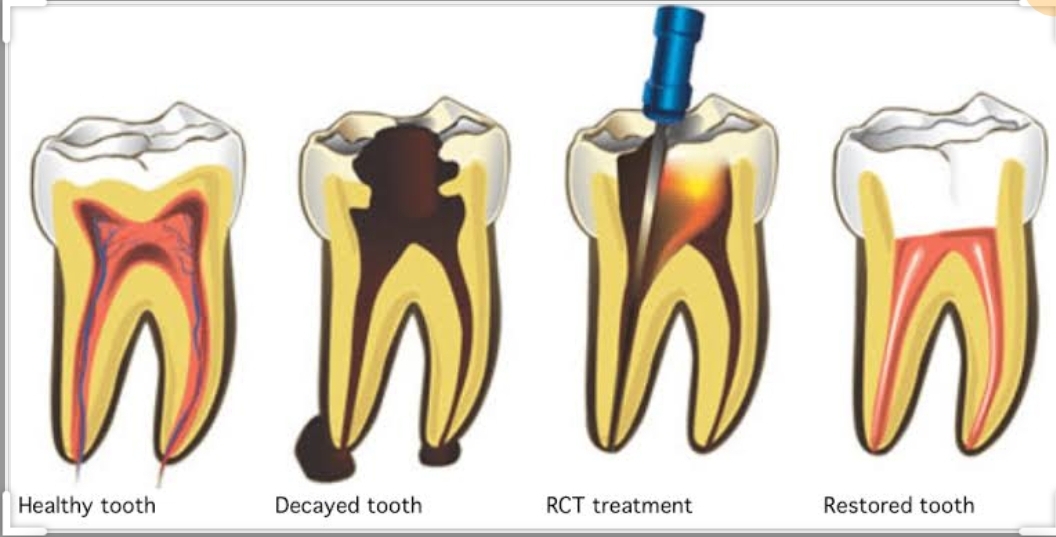
Root Canal Treatment (commonly called RCT) is a dental procedure that often triggers fear, anxiety, and misconceptions among patients. Many individuals delay or avoid this treatment due to worries about pain, cost, or lack of understanding about what it involves.
What is Root Canal Treatment?
Root Canal Treatment is a dental procedure designed to save a tooth that has become severely infected or inflamed. When the inner tissue of the tooth—called the pulp—becomes infected from deep decay, repeated dental procedures, cracks, or trauma, the infection can spread, causing pain or abscess formation.
An RCT involves:
- Removing the infected or inflamed pulp
- Cleaning and disinfecting the inside of the tooth
- Shaping the root canal system
- Filling and sealing it to prevent further infection
The goal is to preserve your natural tooth and prevent extraction. Saving the natural tooth helps maintain proper chewing function, prevents shifting of adjacent teeth, and preserves facial aesthetics.
Why Accurate Patient Education Matters
Research shows that patient anxiety and fear around root canal therapy are significant barriers to seeking timely treatment. Many individuals have had negative stories from others, heard misleading information online, or simply don’t know what to expect. These fears can delay care and lead to worsening dental problems.
Effective patient education helps by:
- Reducing anxiety through clear information.
- Increasing knowledge retention
- Improving satisfaction and decision-making
- Strengthening communication between patient and dentist
How Is RCT Performed?
Understanding the RCT process can demystify the procedure and ease patient concerns. While each case is unique, a typical root canal treatment includes the following steps:
1. Clinical Examination and X-rays
Before treatment begins, the dentist:
- Takes dental X-rays to assess the extent of infection
- Examines the tooth and surrounding tissues
- Reviews symptoms and discusses treatment options
This initial assessment is essential to determine if RCT is the best choice.
2. Local Anesthesia
RCT is performed under local anesthesia to ensure comfort. You should not feel pain during the procedure. Most patients describe pressure but not pain.
3. Accessing the Root Canal
The dentist creates a small opening in the tooth to access the infected pulp. Specialized instruments are used to clean and shape the root canals.
4. Cleaning and Disinfection
The canals are thoroughly cleaned to remove bacteria, infected tissue, and debris. This step is critical to prevent reinfection.
5. Filling and Sealing
Once cleaned, the canals are disinfected and filled with a biocompatible material. After that, the tooth is sealed.
6. Restoration
After RCT, a crown or permanent filling may be placed to restore strength and function. This final step helps protect the tooth and prevent future breakdown.
Common Myths vs. Facts About RCT
There are many myths surrounding RCT that can discourage patients from seeking treatment. Let’s address some of the most common ones:
| Myth | Fact |
|---|---|
| RCT is extremely painful | With modern anesthesia and techniques, RCT is usually no more uncomfortable than getting a filling. |
| RCT causes illness | There is no evidence that root canal treatments cause systemic diseases; on the contrary, untreated infections can lead to serious problems. |
| Extraction is better than RCT | Saving your natural tooth is usually healthier than extraction because it preserves jaw structure and function. |
| RCT always requires many visits | Some cases can be completed in one visit, depending on the condition and infection level. |
How RCT Improves Your Oral Health
Root canal treatment offers many benefits:
- Eliminates infection and pain
- Preserves your natural tooth
- Restores full chewing ability
- Prevents spread of infection to adjacent teeth
- Reduces the need for more extensive dental work later
Patients who receive proper education often report greater satisfaction with their treatment outcomes because they understand the purpose and benefits of the care they receive.
Aftercare: What Should You Expect?
After RCT, it’s normal to experience:
- Mild discomfort for a few days
- Slight sensitivity when biting
- Tenderness around the gum
These symptoms usually improve within a week. For most people, over-the-counter pain relief and good oral hygiene are sufficient. If discomfort increases or doesn’t improve, contact your dentist.
At Oral Medics Dental Clinic, we aim to use a combination of:
- Clear verbal explanation
- Visual diagrams or models
- Educational videos when possible
- Written instructions for home care
Your Comfort Comes First
Many patients express nervousness before endodontic treatment, but communication is the key to comfort. We encourage you to ask questions such as:
- What will I feel during the treatment?
- How long will it take?
- What are the risks and benefits?
- What can I expect after the procedure?
No question is too small—understanding your care is part of our commitment to your well-being.
